
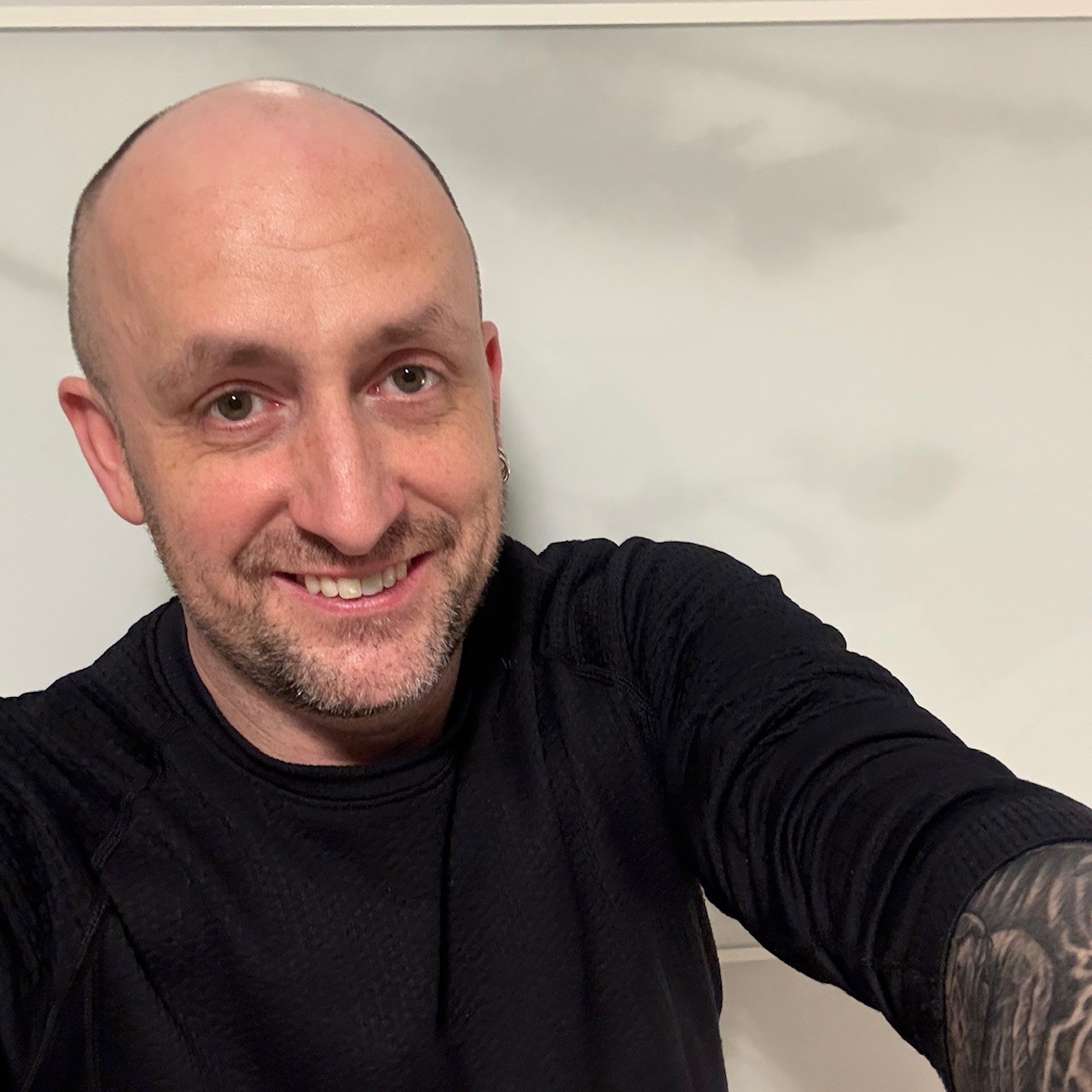
Registered Social Worker Shaw Krauchi has worked in the Adult Emergency Department (ED) at Health Sciences Centre (HSC) for almost 14 years. His role has been ever evolving and expanding.
In the ED, Shaw works with folks who are struggling with poverty, houselessness, disabilities, mental health challenges, and both past and current traumas.
Building strong partnerships with community resources is a vital part of Shaw’s role, and he often works with Indigenous communities and resources, family and peer supports, and interdisciplinary team members to help improve health and social outcomes for patients during and after hospitalization.
Read an in-depth Q&A Shaw completed for us in honour of March’s Social Work Month to learn all about what it’s like to do this kind of complex work at Manitoba’s largest acute care hospital.
What does a ‘typical’ day look like for you?
Although HSC ED’s Social Work service has expanded to be available 24/7, I currently work on weekdays. I start my day with a morning ‘rounds’ huddle with the interdisciplinary team. We discuss the patients in the ED, care trajectories, and ways in which we can best assist.
The interesting part of working in the ED is that every day is unique. Today, I might be working with patients/families who have experienced a motor vehicle collision, a serious assault, the unexpected loss of a family member, or concerns of elder abuse. The next day I meet people who are dealing with addictions, mental health struggles, and not having anywhere warm or safe to sleep.
It is a very dynamic work environment and one that requires comprehensive knowledge of the social determinants of health.
What’s something people might not know about the work you do?
The HSC Adult Emergency is truly a central hub that sees ‘a bit of everything.’ It is often one of the first places to meet individuals who are experiencing a new or worsening crisis that may be having an impact on the broader society. Whether it is a new harmful substance, pandemic or health outbreak, or a change in a major psychosocial system, the negative effects of emerging concerns often appear early on in the ED.
As a result, the ED is uniquely positioned to identify and begin trying to address the issue; Social Workers play a vital role in this process. We work with the team here and applicable community resources to identify and help navigate the concern and initiate a wider response.
For example, during the COVID-19 pandemic, HSC ED Social Workers were heavily involved in isolation processes for folks living without a stable place to isolate or recover from the virus.
Social Work specializes in a very holistic approach to caring for someone while advocating and connecting with available and appropriate community agencies. While someone might present to the ED for pneumonia, it may be the case that the medical illness is only worsening because an individual is living outside in the cold, unable to afford the prescribed treatment medications, and has no one available to help them.
What inspired you to pursue a career in health care?
My career pathway was never straightforward. I initially had an interest in Criminal Psychology, and I took an online course through the Justice Institute of BC that led me down the road of Social Work.
While in the Social Work faculty, I had to select a field placement. My dad was working at HSC at the time, and the environment he described always sounded quite dynamic, fast-paced, and interesting.
After meeting some HSC Social Work representatives at a career fair, I decided to apply for my practicum here. I really enjoyed the work, the staff, and the patients I got to meet. I accepted a position working as a float coverage staff member and then spent a year in the Rehab Hospital. I never thought I would work in the Emergency Department as it seemed quite intimidating, but I decided to give it a try and have stayed ever since!
What do you enjoy most about your job? What keeps you motivated?
Every day, I meet people who have experienced and endured so much in their lives. I get to share a moment with them and hear a piece of their story. Even though time with someone is quite limited in this environment, it can be an amazing moment to walk a few steps with them in their journey and hopefully offer a much-needed bit of care and compassion while they are here.
I also work with an incredibly strong team of other healthcare providers who are faced daily with seeing difficult situations, traumas, losses, and pressures, and this shared experience and support is so important.
What are the most challenging aspects of your work, and how do you manage them?
The most significant challenges of working in the Emergency Department are time and resource limitations. We jokingly say that we help navigate complex situations “in the span of a TV show.”
Unfortunately, these constraints limit how much we may be able to assist someone in the moment, especially when you encounter system barriers, wait lists, and other challenges. It is important to be comfortable in this work knowing you can’t fix everything, so we learn to focus on the most pressing concerns someone is experiencing in that moment. We also want to support patients in recognizing their own strengths and resource knowledge.
What do you think are the biggest challenges facing Manitoba’s healthcare system today?
Health care is complicated because so many factors have an effect. Wait times and retention of healthcare staff are always hot topics. From a more Social Work-focused perspective, socioeconomic status is a significant issue.
A prescription for antibiotics is only helpful if someone can afford it or has coverage.
A recommendation to keep your feet up, rest, keep wounds clean, and eat healthily might work well if you have a home and enough money to purchase healthy food, but it is extremely difficult if you are living outside, possibly without a stable income source.
Attending follow-up appointments might be especially challenging if you live alone, have mobility issues, or do not have reliable transportation.
Although the healthcare system may be able to diagnose and offer treatment for an ailment, these plans of care often come with the assumption that the individual has the means, ability, and resources to realistically and effectively carry them out.
“Being in the ED has the added pressure of time constraints, so the work is quite fast-paced. The reality is that we may only have a short window of time to work with someone.”
If you could change one thing about the healthcare system, what would it be and why?
Speaking purely through a Social Work lens and from my own perspective, one thing I have always felt would be helpful is a dedicated outreach team that works from the hospital. This would be an interdisciplinary team that works with folks who are being discharged from hospital but who would benefit from a direct hand-off of care for short-term follow-up.
For example, hospital Social Work may be able to secure financial assistance and a housing spot for someone, but does this person have the means and resources to furnish their new place? Do they know where to buy groceries or how to use the appliances in their new suite? If they don’t have a calendar and a way to keep time, reliable transportation, or an understanding of bus routes, will they make it to their follow-up medical appointment?
Discharges from hospital can be quite complex, especially for someone who does not have a family member or friend able to assist, or the resources, skills, and ability to navigate the next steps.
What would you say to someone considering a career in your field?
I think the most significant thing I learned early on is that it is helpful to think about your strengths and areas of interest or knowledge. It’s also beneficial to know what topics, environments, or demographics might be more challenging for you. For some, this may mean being open to additional learning, including from colleagues and especially from clients. For others, this can help guide career paths if there are specific areas of interest or ones that you feel might not be for you.
Self-reflection should be an ongoing process and the results of that process can change, sometimes multiple times. I recall thinking during my practicum, “I could never work in the Emergency!”. As I spent time in different areas of the hospital, my view on this gradually changed. Now, almost 14 years later, I am still here.
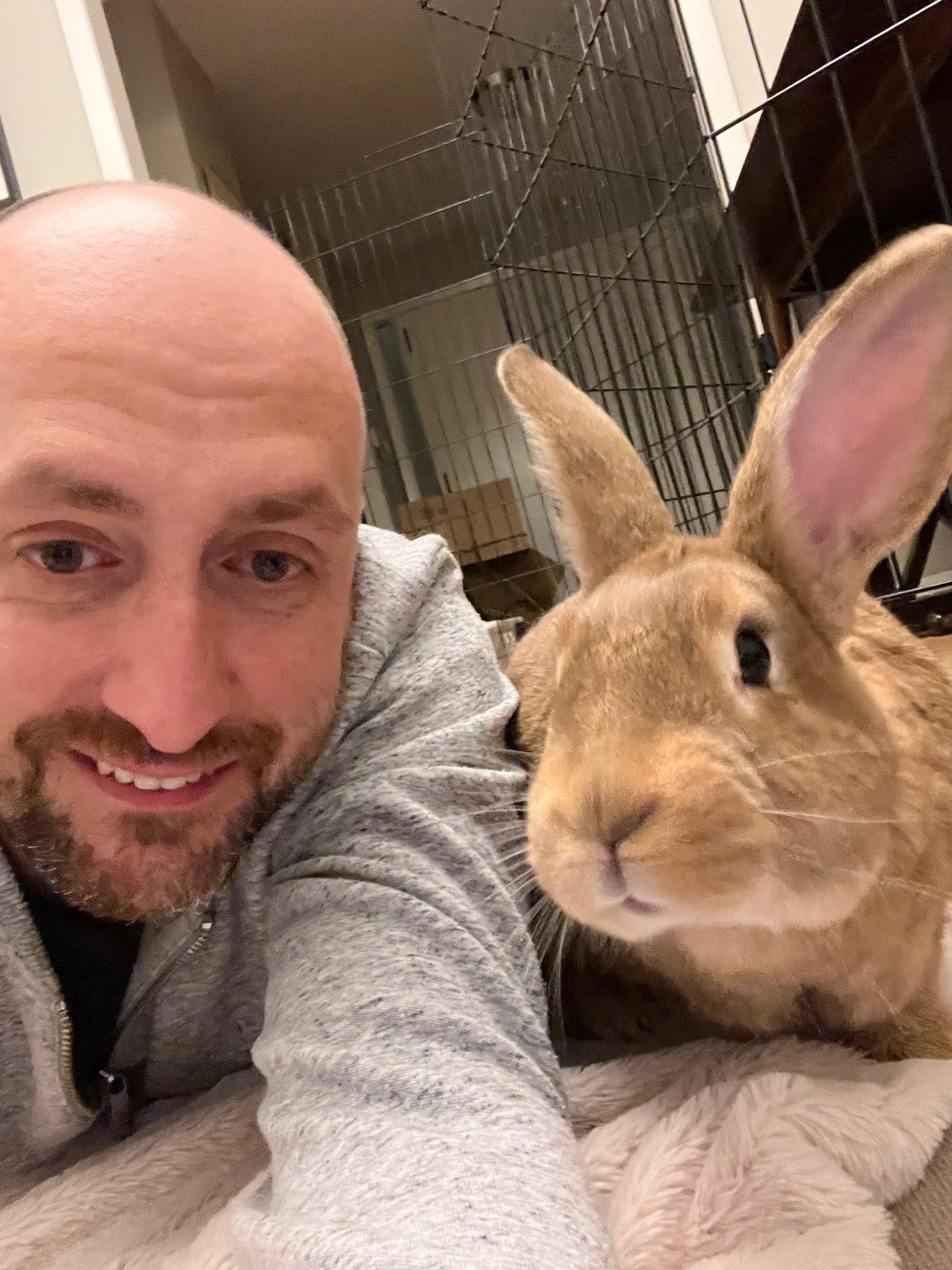
Shaw has an Honours Degree with a focus in Psychology and completed his thesis in the Neuropsychology field followed by a Bachelor of Social Work. He says he tends to be more of an indoors person and enjoys relaxing with family and pets (rabbits and a very demanding parrot!). He enjoys learning about science and fun trivia facts that he will never need to use and always has some kind of project on the go keeping him busy.