
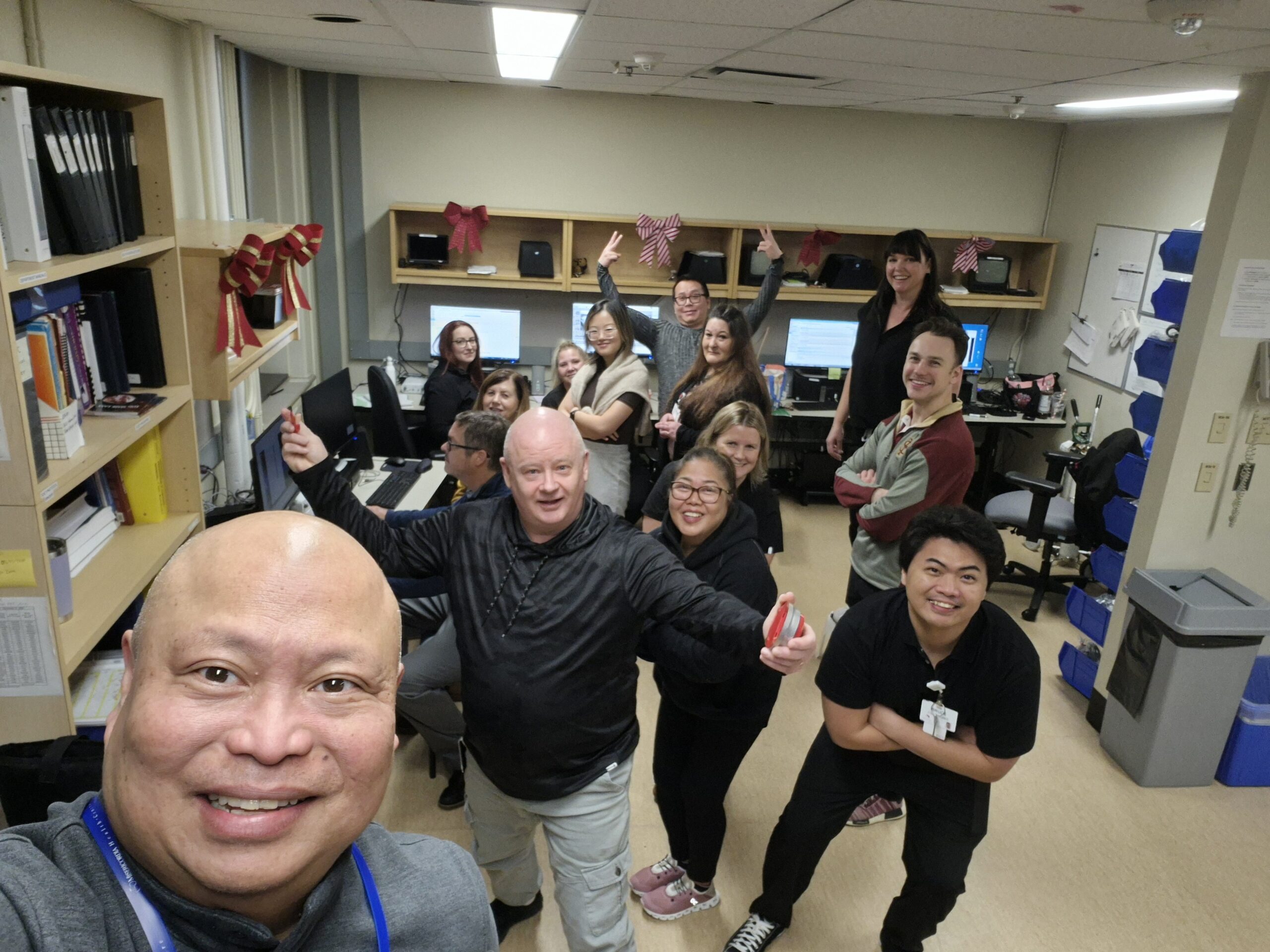
While most of the city sleeps, Bernard De Matta (bottom left of photograph) is at work, quietly monitoring, analyzing, and helping patients find something many of us take for granted: a good night’s sleep.
As a registered polysomnographer at the Sleep Disorder Centre at Misericordia Health Centre, Bernard has spent more than 17 years in health care, specializing in the complex science of sleep. His job focuses on diagnosing and treating sleep disorders by monitoring key body signals throughout the night, like brain activity and breathing patterns.
“We’re not watching you sleep,” Bernard says of the Clinic’s team of 17 members. “We’re looking at what’s happening in your brain and other systems while you sleep.”
Polysomnographers provide diagnostic analysis of sleep cycles or architecture by means of monitoring physiologic parameters.
The team uses a variety of non-invasive diagnostic tests, including:
- EEG (electroencephalogram to measure brain activity)
- EOG (electrooculography tracks eye movements, or the electrical potential between the front and back of the human eye)
- EMG (electromyography or nerve conduction studies)
- ECG (electrocardiogram to measure the electrical activity of the heart)
- Cardiorespiratory
These physiologic parameters provide important information related to what may be disrupting and negatively affecting sleep cycle and quality.
“We address sleep beathing disorders overnight to resolve sleep apneas and upper airway resistance syndrome to improve sleep quality. Better sleep quality improves individual well-being and results in so many positive outcomes.”
Working overnight in an acute care program, Bernard typically monitors two patients at a time, carefully analyzing their sleep cycles and stepping in when needed. One of the most critical parts of his work is addressing sleep-related breathing disorders, such as sleep apnea, using non-invasive positive pressure ventilation (NIPPV). These solutions can greatly improve sleep quality and overall health, and that impact is what keeps him going.
“I’m very pleased when I see patients improve their sleep quality,” he shares. “Better sleep leads to better quality of life.”
Each night brings something new. Different patients, different medical histories, and different challenges. It’s this variety that first drew Bernard to health care and still motivates him today. The work requires both precision and patience, especially when patients are adjusting to equipment like NIPPV, which can take time to get used to. For Bernard, the key is simple: listen.
“Understanding their difficulties and explaining what to expect makes a big difference,” he says.
Over the years, it’s the small but meaningful moments that stand out most, patients who return with better sleep, or who express appreciation after finally finding relief.
“Patient appreciation is always my success story.”
– bernard de matta, polysomnography technologist
Outside of work, Bernard embraces a slower pace, catching up on rest (it’s so important!), cooking international recipes, and unwinding with his favourite TV series. Looking ahead, he sees the bigger challenges facing health care, like staffing shortages and limited resources. Still, he remains committed to the work and the people he serves.
For anyone considering a career in sleep health, Bernard’s advice is clear: “There’s growth, job security, and a lot of opportunity to keep learning.”
At the end of the day (or night), helping someone sleep better means helping them live better.