
Paramedicine is a demanding career. Intermediate Care Paramedic and MAHCP member Philip Habacon shares his philosophies on navigating PTSD and purpose.
Working as a paramedic means responding to high-intensity emergencies. According to Habacon, it also means witnessing distressing moments most people hope never to see. The experiences shaped him professionally, but they also changed how he understood life, resilience, and mental health.
On June 27, Post-Traumatic Stress Disorder (PTSD) Awareness Day, Habacon — a 14-year paramedic — wants people to understand that post-traumatic stress disorder is often less dramatic than many imagine.
Sometimes, it begins with becoming a stranger to yourself.
Before receiving a PTSD diagnosis, Habacon noticed subtle changes. He increasingly sought isolation, spending long stretches of time alone, and withdrawing from the people around him.
A once-outgoing diving instructor and extroverted traveller, Habacon found himself hiking alone through Manitoba’s wilderness, sometimes camping in the middle of winter, and deliberately seeking solitude.
What had once felt like independence was becoming something different. He no longer wanted to attend social gatherings, spend time with friends, or be around other people.
Looking back, Habacon recognizes isolation as one of the earliest signs that something had changed. The joy he once found in community and connection was slowly giving way to withdrawal.
“Once you see that you are changing from your old self, it’s time to reassess,” he says.
That insight has become one of the central messages of his recovery.
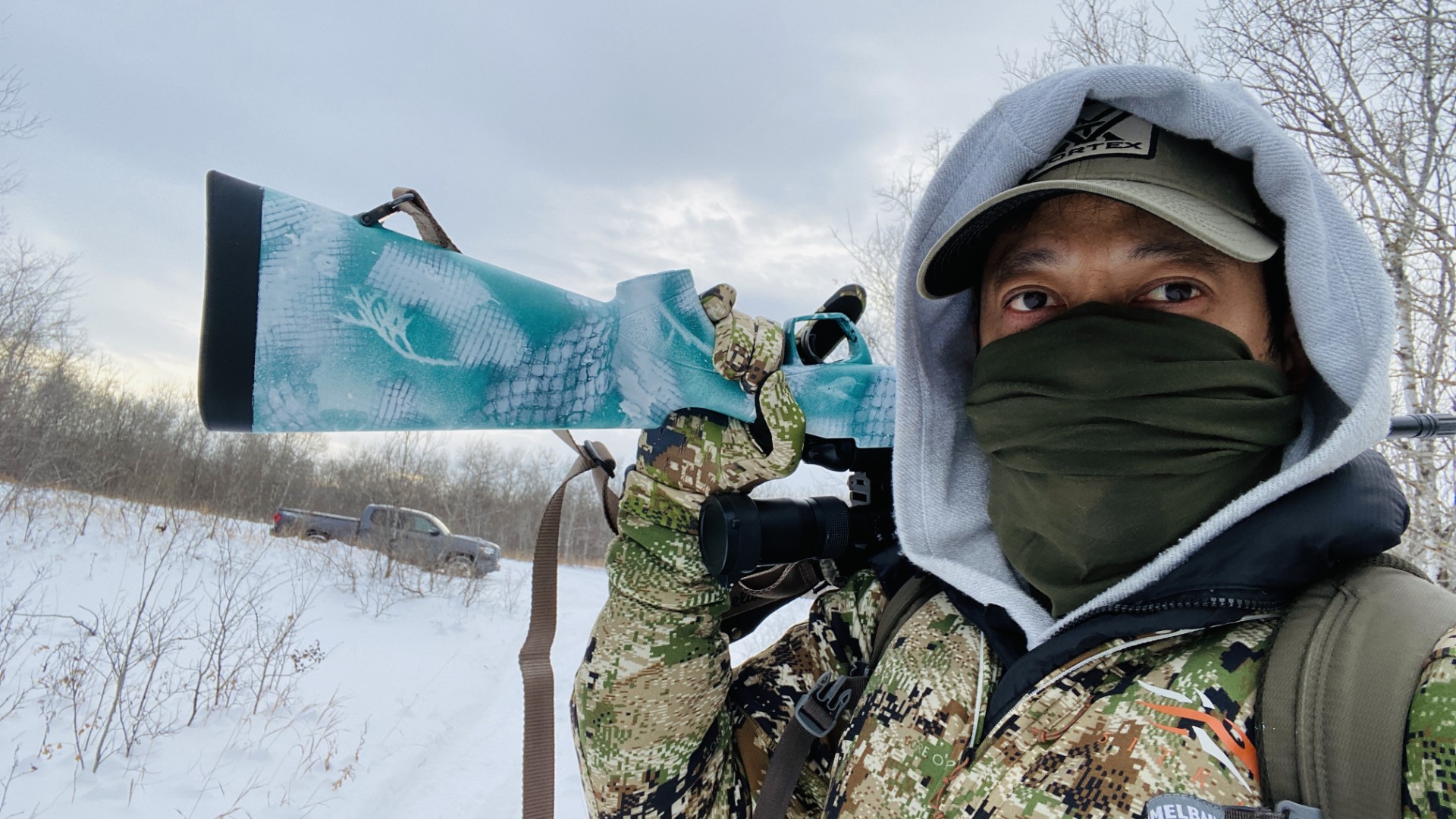
Photo: Philip Habacon in his winter hunting gear in Manitoba’s wilderness.
Living with PTSD
PTSD symptoms can look different from person to person, but Habacon believes one warning sign is when people no longer recognize themselves. The hobbies, relationships, and activities that once brought joy begin to fade, replaced by withdrawal, hypervigilance, or emotional distance.
Like many first responders, Habacon acknowledges there is a culture of toughness in emergency services. In many ways, that toughness serves an important purpose.
“When you come into the first responder world, you’ve got to create your force shield,” he says. “If you do not, you will not last long in the field.”
The work demands resilience. Paramedics are not ambulance drivers, after all. But Habacon argues resilience and humanity are not opposites.
“Recognizing you need help is not a sign of weakness,” he says. “It’s part of your strength.”
His perspective challenges a common misconception about mental health injuries. Strength is not the absence of struggle. Often, strength is recognizing when help is needed and acting before a crisis deepens.
If you have PTSD, your symptoms might include:
- flashbacks (feeling like you’re reliving the event)
- sleep disturbances and nightmares
- intrusive memories
- being hyperalert (always feeling on edge or in danger)
- persistently negative thoughts
- low mood, anger, or feeling emotionally numb
Recognizing you need help is not a sign of weakness. It’s part of your strength.
Philip Habacon
Recovery: Reclaiming what was lost and returning to oneself
Recovery has not meant eliminating every symptom. Habacon still speaks openly about the hypervigilance that accompanied his PTSD diagnosis — the constant expectation that something terrible could happen. For a time, it even kept him off his motorcycle.
This June, however, he joined a motorcycle ride supporting breast cancer research in honour of his sister, who was undergoing treatment. The ride was more than a fundraiser to Habacon. It was a way to reclaim a part of himself that hypervigilance had taken away.
“It shifted my focus from dying to living,” he says.
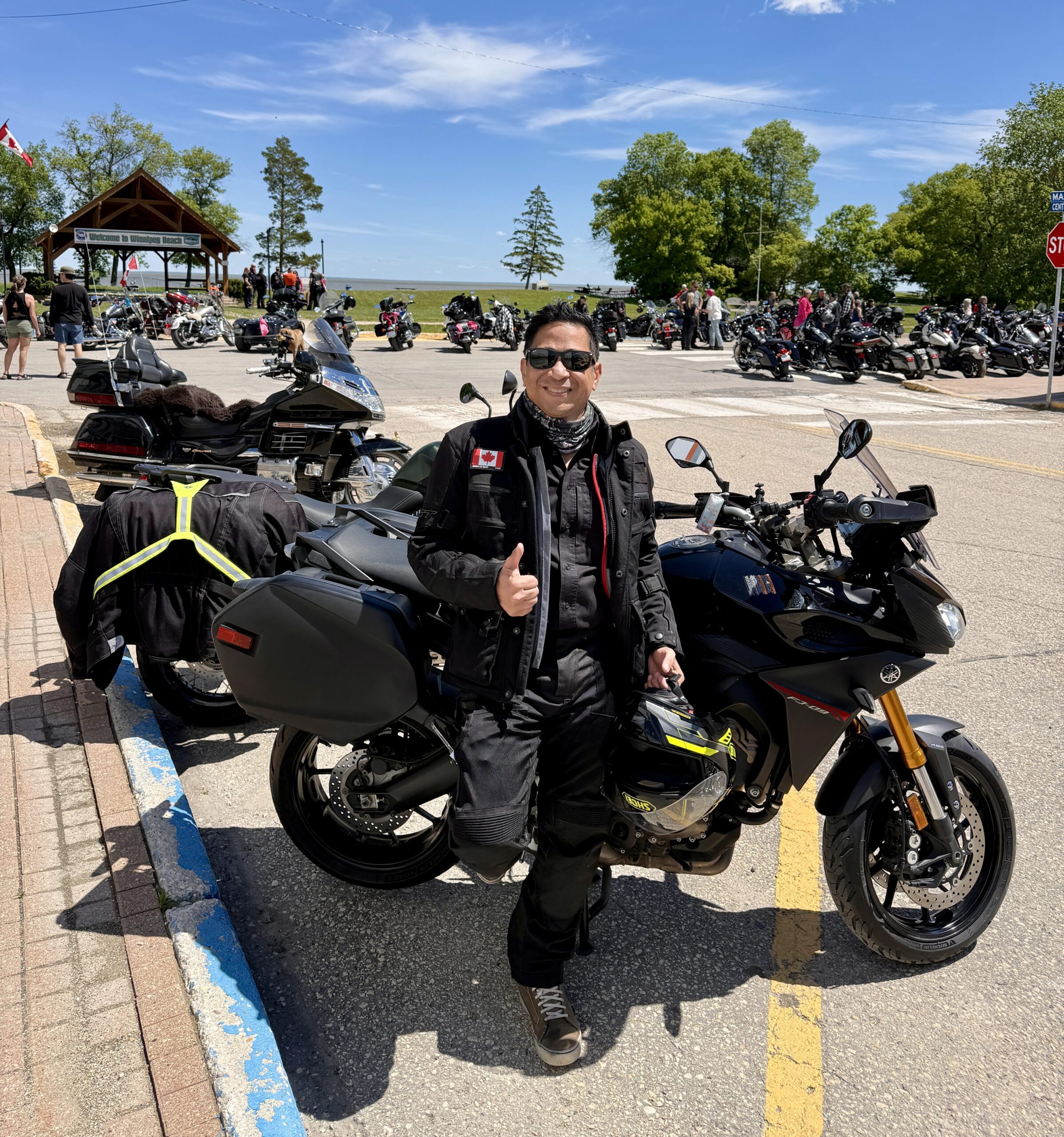
Photo: Philip Habacon poses with his motorcycle during the 25th annual Breast Cancer Pledge Ride.
Throughout his recovery, Habacon has turned to writing and philosophy to make sense of his experiences. He references thinkers ranging from ancient Greek philosopher Heraclitus to German philosopher Friedrich Nietzsche. Heraclitus famously wrote that no one can step into the same river twice. For Habacon, that lesson is simple: every moment matters because it cannot be repeated.
Years spent in emergency services reinforced that belief. Life is temporary. Relationships matter. Time with loved ones should never be taken for granted.
That same philosophy shapes how he views mental health.
“We have to maintain our licence every year. We have to pay insurance. We have to maintain our ambulances,” he says. “Why are we not maintaining ourselves?”
It is a question that extends far beyond emergency services.
Taking the first step: Advocating for yourself
For anyone who believes they may be living with PTSD, Habacon’s advice is direct: listen to the changes within yourself and seek professional help. Pay attention when isolation replaces connection, when hypervigilance replaces joy, or if you no longer feel like yourself.
The goal, he says, is not simply to survive. It is to remain connected to the people, passions, and purpose that make life enjoyable.
Philip Habacon (he/him) is a Filipino-Canadian author, an intermediate care paramedic (ground and ex-flight), and a member of the College of Paramedics of Manitoba (CPMB) and the Paramedic Association of Manitoba (PAM), and member of MAHCP.
He developed PTSD as a result of his experiences as a paramedic — a condition for which he is presently undergoing treatment.
Before immigrating to Canada, he worked as a PADI-qualified Master Scuba Diver Trainer (MSDT) for six years instructing in Pattaya, Thailand.
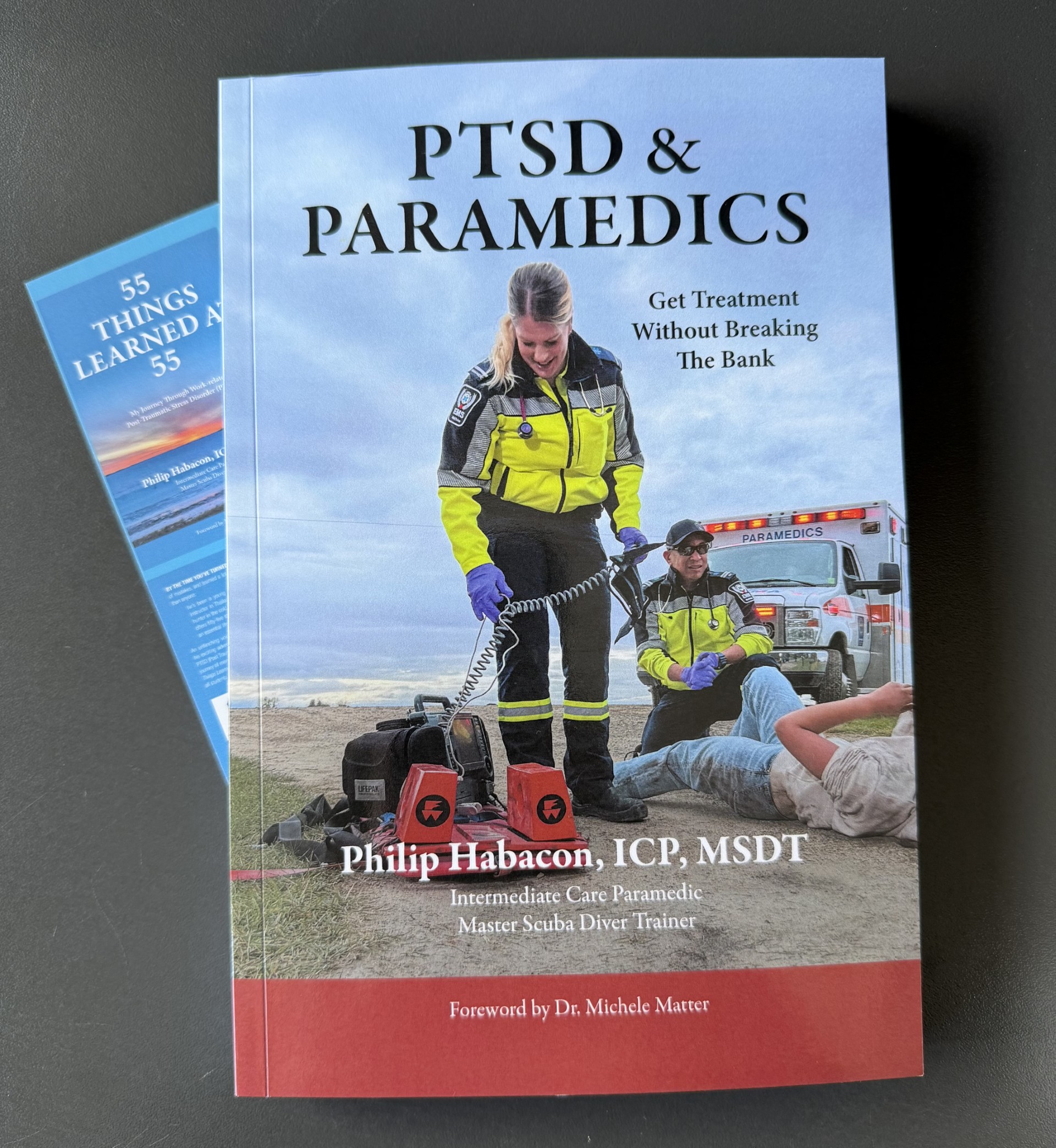
“55 Things Learned at 55: My Journey Through Work-related PTSD” is the first of three parts from a journal that begun in 2013. His second book, titled “PTSD & Paramedics: Get Treatment Without Breaking The Bank” (pictured left) will be released by Friesen Press in Summer 2026.