Roxanne, Healthcare Aide
Jocelyn House Hospice
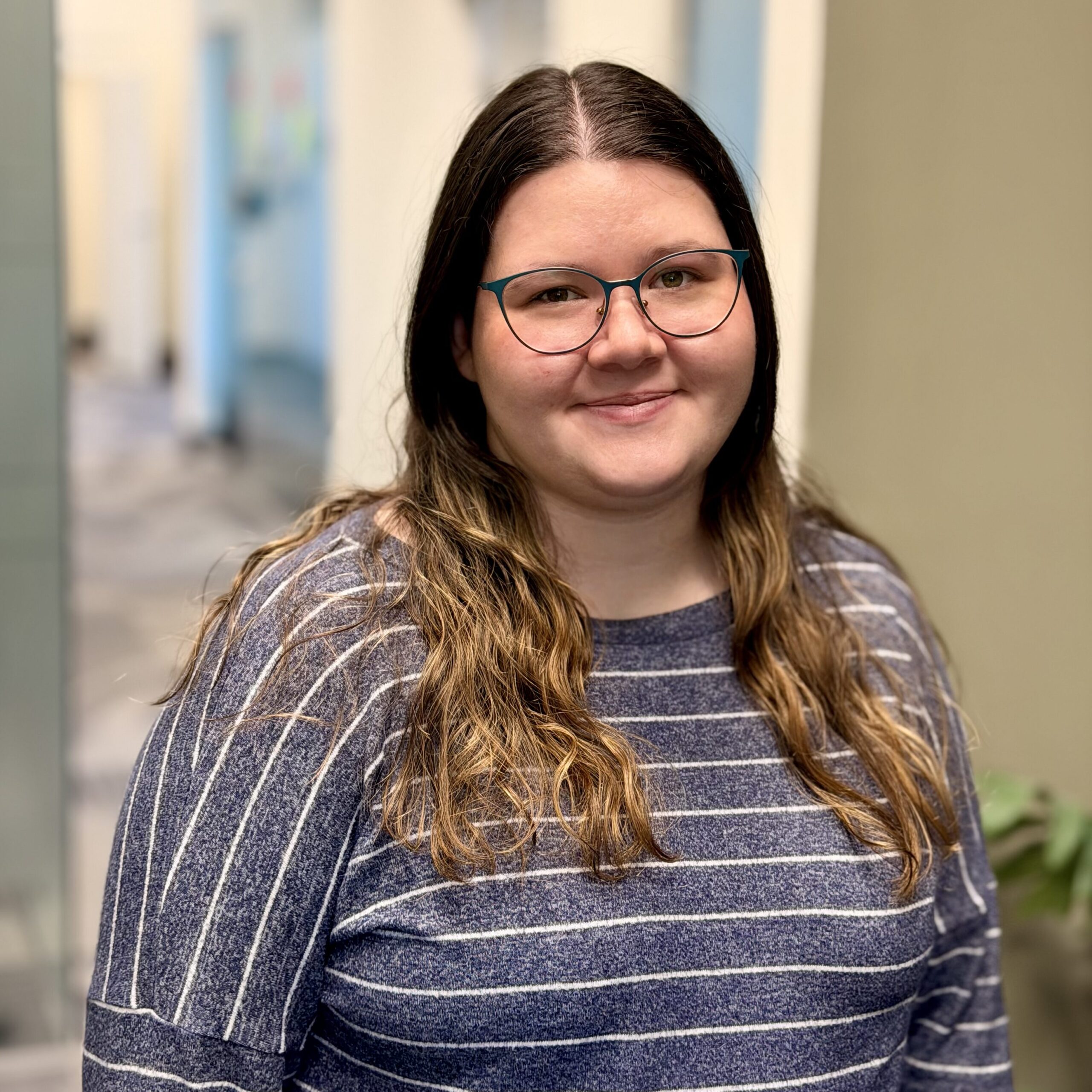
For nearly four years, Roxanne has worked as a healthcare aide at Jocelyn House, supporting residents who need end-of-life care.
Founded in 1985 as the first residential hospice in Western Canada, Jocelyn House offers high-quality, family-centered care in a home-like environment for people who are living out the end of their lives.
Roxanne’s mother, a nurse of 35+ years, inspired her to pursue a career in health care. When Roxanne was in high school and thinking about her future, she asked her mom what kind of work she could picture her doing. The answer surprised her: palliative care.
“As a teenager, I was a little concerned that my mom thought I should work with people who were dying, and I didn’t take her suggestion too seriously at the time.”
Looking back, Roxanne remembers driving around St. Vital with her mom, trying to locate Jocelyn House out of curiosity and noticing the deer wandering nearby. Today, deer are a familiar sight outside her workplace. It turns out her mother was right with her career prediction.
“I should have taken my mom’s suggestion more seriously that day,” Roxanne says. “I was meant to work in palliative or hospice. I just didn’t know it yet.”

Building a Better End-of-Life Care System
Jocelyn House Hospice provides specialized, private palliative care in a home-like setting. Unlike acute-care hospitals, hospices prioritize comfort, dignity, and quality of life for patients and their families. Quiet spaces, homemade food, and the chance for residents to relax and enjoy the time they have left.
“For some, it’s the first time since being in hospital that they get a private room or get to eat something they genuinely enjoy. For their families, who often have caregiver fatigue, it’s the first time they feel like they can take a breath.”
Unfortunately, access to this level of care is limited.
Manitoba currently faces a serious shortage of hospice beds. Of the province’s 16 total hospice beds, four are located at Jocelyn House. As the population ages and demand for this level of end-of-life care continues to grow, many people who would benefit from hospice services spend their final days in hospital or pass away while waiting for a placement.
For healthcare workers like Roxanne, the hospice bed shortage is part of a broader set of systemic challenges. Since the pandemic, burnout has intensified across the healthcare system. Chronic staffing shortages, rising demand, and unsustainable ratios mean workers are often being asked to do more with less — and patient care suffers as a result.
“Jocelyn House is a great example of how staff-to-patient ratios can impact the quality of care we are able to provide. This low ratio is not typical in most healthcare facilities.”
Increasing the amount of hospice beds in the province would allow more Manitobans to access specialized care, free up hospital beds for acute patients, and provide a more peaceful and dignified place for people to spend their end-of-life.
Jocelyn House Hospice is partially funded through a Service Purchase Agreement with the WRHA; however, this funding has remained unchanged since 2013, despite substantial increases in operating costs. To bridge this growing gap, the hospice relies heavily on fundraising and the generosity of foundations, community partners, and individual donors. Despite the challenges, the hospice team continues to provide exceptional end-of-life care to individuals and families.
Roxanne believes compassionate end-of-life care should be a guaranteed service, rather than relying heavily on charitable support. With 16 hospice beds across Manitoba — far below what is recommended for a growing, aging population — she says additional investment would help strengthen hospice services.
This includes increased government funding for existing hospices like Jocelyn House, as well as a commitment to expanding hospice capacity across the province. In the meantime, she encourages people to learn more about hospice care and support organizations like Jocelyn House.
Roxanne holds a certificate in Disability and Community Support from Red River College, as well as her Healthcare Aide certification from the Academy of Learning in Winnipeg South. After a difficult experience working as a healthcare aide at another facility, Roxanne began to question whether she had chosen the right path at all.
“I was discouraged and uncertain,” she says. “It was only once I got a job at Jocelyn House that I started to realize I actually was a good healthcare worker.”
Jocelyn House offers low patient-to-staff ratios and a home-like environment, which means staff have the time and space to provide high-quality, personalized care. The facility fosters a supportive environment that extends beyond the residents and their families. Roxanne says the workplace culture is collaborative, and she feels comfortable asking questions and learning from her peers.
“Sometimes not every place is the right fit,” Roxanne says. “But when you find it, it makes a world of difference. I’ve found a place I look forward to going to work and that I’m passionate about.”
Care That Looks Different Every Day
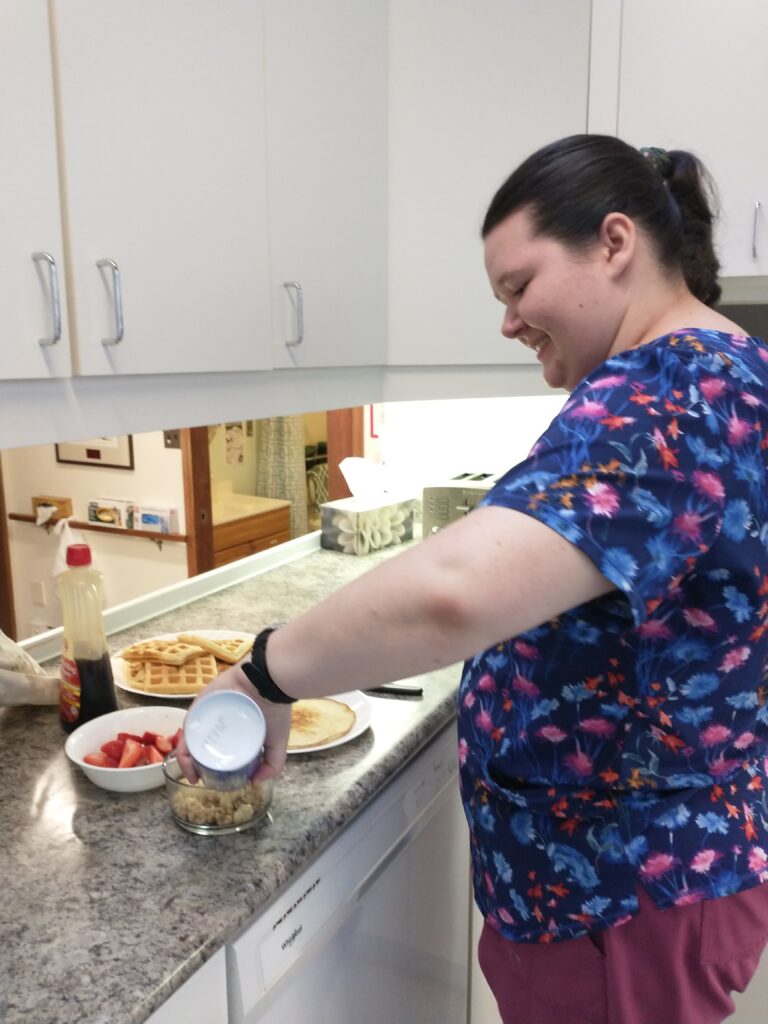
At Jocelyn House, Roxanne wears many hats. Her days include preparing meals, doing laundry, tidying shared spaces, and providing both physical and emotional care to residents. She starts most mornings by making breakfast, helping residents get dressed, and making sure they feel comfortable and dignified for the day ahead. From there, no two days are the same.
She might spend time reading to someone, sitting quietly and holding a hand, sharing a conversation, baking a resident’s favourite treat, or joining them outside to enjoy the fresh air. The simplest moments can make the biggest impact — a good hair wash after months in hospital, or a familiar song sung together.
“One of my residents recently told me he couldn’t think of a better place to spend his last chapter, or better people to care for him,” Roxanne says. “That really speaks to how much of an impact we can make.”
Residents’ families also experience the impact of this compassionate care. Roxanne recalls receiving thank-you cards from families she cared for over months, as well as from others she knew for only a few days. One letter came from a family whose loved one passed overnight; they wrote because they knew they wouldn’t see Roxanne again. She keeps every letter and card she receives.
“The impact we can have on someone we get to care for even a short time can mean so much and it really touches my heart,” she says.
The Emotional Reality of Hospice Care
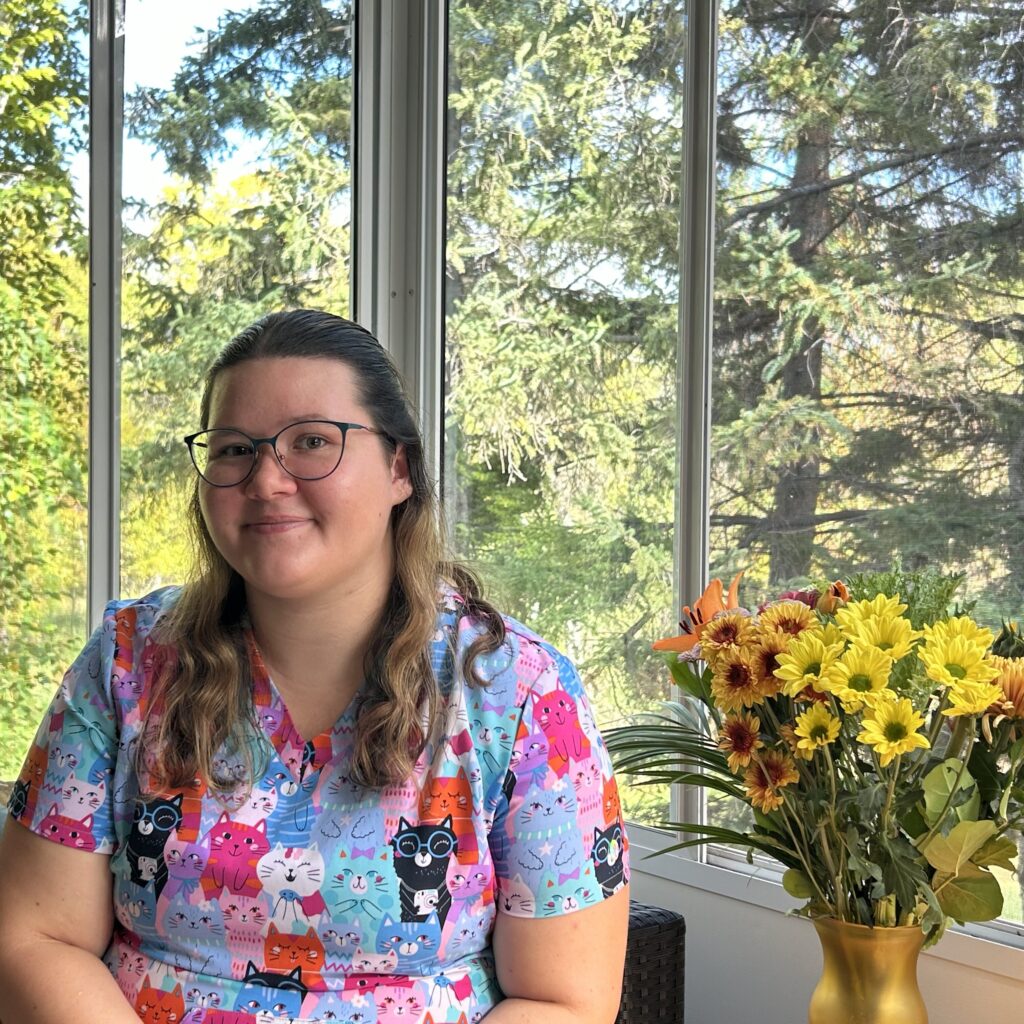
When Roxanne started working at Jocelyn House four years ago, she received comments from peers like ‘I could never work in a place that would be so sad all the time…‘ or ‘…isn’t it depressing to work in hospice?‘.
While grief is an unavoidable part of the job, she disagrees that hospice is defined by sadness. In fact, she says working at Jocelyn House has made her a better caregiver and helped her appreciate life and human connection in a more profound way.
“Of course, we have emotional days,” she says. “But it’s not always sad. Most days you’ll hear people laughing, playing games, singing, and the house often smells like bacon or fresh baking.”
The lower patient-to-staff ratios at Jocelyn House make those moments possible. They allow healthcare aides to build real connections with residents and families, to personalize care, and be present in ways that are increasingly rare in a strained healthcare system.
“I love knowing that the people I’ve cared for received excellent care, and that I was able to make their last chapter a more positive and meaningful experience. I know I was able to comfort them and their families. I feel so proud of the work I’m able to do. At the end of the day, the happy days far outweigh the sad times.”
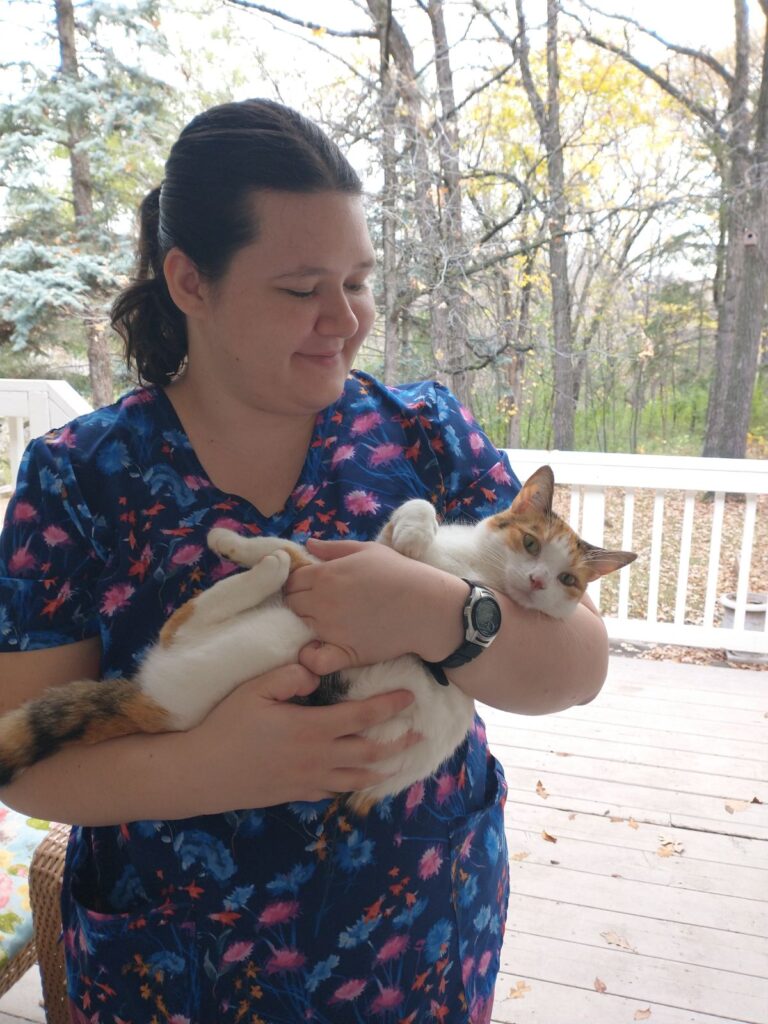
When she’s not busy at work, Roxanne is making the most out of life as she and her fiancé are planning their upcoming wedding. She knows the importance of self-care and decompresses from work through her hobbies: painting, baking, watching sitcoms, and – much to her residents’ delight – snuggling up with her pets.
Her advice to someone considering a career in hospice or palliative care:
“You need to have heart… It’s not just a job. It’s a privilege to be able to care for people in their last chapter.”