
In March 2026, we had the honour of sitting down with Terrell, a 14-year paramedic, for a conversation (soon to be turned into a profile video). We talked about his career path and the daily life of a paramedic.
Q: What made you decide to become a paramedic?
“I didn’t really know what I wanted to do when I grew up, then I found out RRC was bringing the paramedicine program to Ashland, where I grew up. I took the course, and I’ve been working for 14 years as a paramedic all over what is now Shared Health East, and some in Shared Health West Zone as well.”
Q: What would you say to someone considering a career in paramedicine?
“It’s the best job in the world. I’ve gotten to do some cool things and meet some incredible people. And, you need to learn how to leave work at work.”
Q: What are some of qualities and attributes a paramedic must possess?
“Paramedics must be good investigators. Obviously, sometimes, we can’t connect with a patient when we’re performing an assessment, or a patient may give us an answer, but not all the details we need. Communication is key, along with quick decision-making, although it’s important to take enough time to be sure we’re making the right decisions based on good data, assessments, and the diagnostic tools at our disposal.”
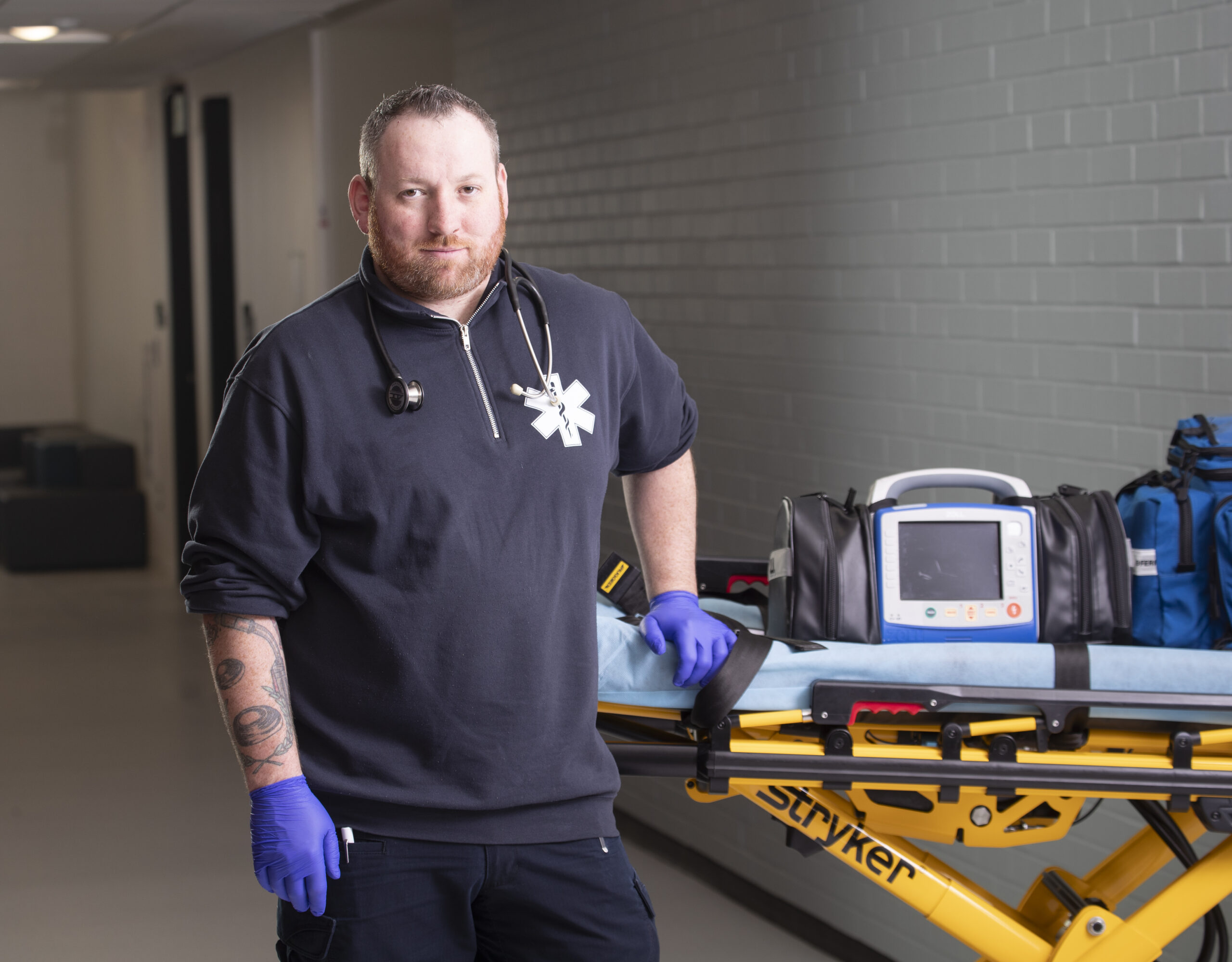
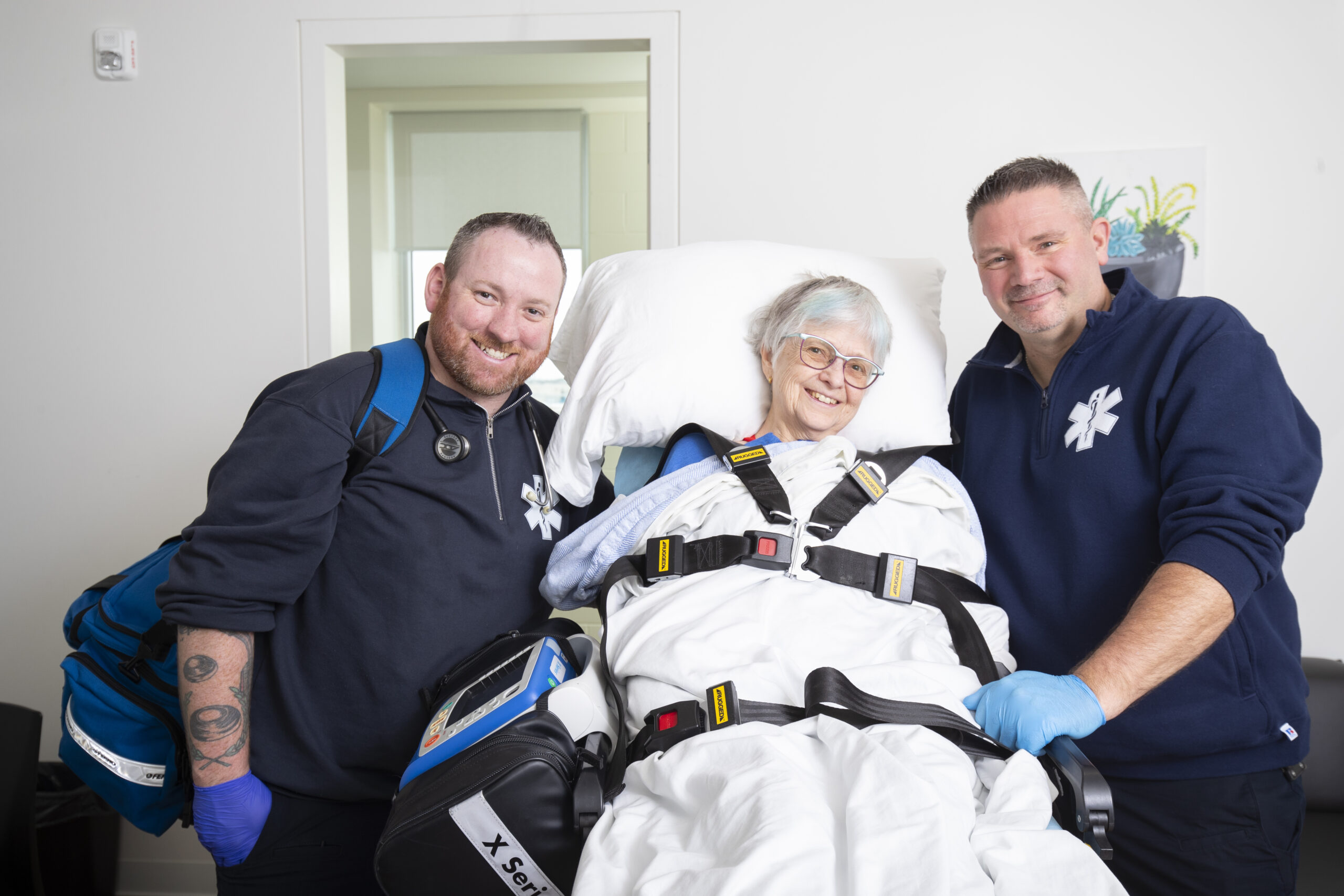
Terrell, Intermediate Care Paramedic, Riverton EMS
Q: Can you describe a typical day?
“A day in the life of a paramedic is almost undefinable. As an intermediate care paramedic, I might do an intravenous or an interosseous, which is accessing the internal bone space if I can’t get an IV in; airway management; and a whole lot of medical treatments like fast-pushing IV meds, setting up an infusion, or conducting an EKG, a test that records the electrical activity of the heart to detect potential problems. It’s literally like a hospital in the back of a truck.”
Q: What would you like Manitobans to know about paramedicine and the healthcare system?
“I’d like Manitobans to know how far paramedicine has come, in the time that paramedics, and EMTs before them, have been working in Manitoba. It wasn’t that long ago that most of Manitoba E.M.S. was run by volunteers, and now trained, advanced life support paramedics are on board most trucks. The skills and interventions that we can bring to a patient’s home (or wherever they may be)…we’re helping with that chain of survival. We’re getting things set in motion to improve patient outcomes long before we get to a hospital.
I’d also like Manitobans to know we need more healthcare providers. Across every level. Allied health, nurses, and doctors. We need more people providing care. Many provinces have some enticing recruitment packages, and we lose valuable people to attractive incentives.”